Accessibility · IST & SAW
Wheelchair Accessible Transfers at Istanbul Airport 2026
Istanbul's two airports handle wheelchair users every day, and the pieces you need — an assistance programme, accessible vehicles, step-free metro stations — all exist. What does not exist is a reliable accessible option you can improvise at the kerb on landing. Below: the one rule that makes everything work (pre-arrange), how assistance is requested, what to confirm before booking an accessible van, and honest notes on the M11 metro, coaches and Sabiha Gökçen (SAW).
Updated

01 · The one rule
Pre-arrange — nothing accessible should be left to the kerbside queue
Every smooth accessible arrival in Istanbul shares one feature: both halves of the journey — through the terminal and away from it — were arranged before the flight took off.
Why improvising fails here
The standing taxi queue at IST and SAW is made up of standard saloon and estate yellow cabs. They are honest, metered and plentiful — and almost none of them carry a ramp. A traveller who can transfer to a car seat with a folding chair in the boot will manage fine; a rigid-frame or powered chair user who lands without a booking is left asking the taxi desk to source an equipped vehicle on the spot, which can work but can also mean a long, tiring wait after a long-haul flight.
The two bookings to make
First, airport assistance through your airline — this covers the aircraft door to the arrivals hall. Second, an accessible vehicle with written equipment confirmation — this covers the arrivals hall to your hotel door. Make both when you book your flight and the arrival becomes genuinely routine: an escort meets the aircraft, and a driver with the right van and a name sign waits at the other end.
The honest summary
Istanbul is a workable city for wheelchair users arriving by air — but it rewards preparation heavily and punishes improvisation. Fifteen minutes of messages before you fly replaces every uncertain moment after you land.
02 · Airport assistance
IGA Cares-style assistance — requested through your airline
Istanbul Airport publishes details of a passenger assistance programme. The key point travellers miss: you do not book it with the airport — your airline does.
How the request works
Per the airport's published accessibility info, IST runs an assistance programme (branded IGA Cares in the airport's material) for passengers with reduced mobility. The request goes via your airline — ideally at booking, otherwise at least 48 hours before departure — using the standard codes (WCHR, WCHS, WCHC). The airline forwards it to the airport's assistance team at both ends of the journey. Verify the current procedure at istairport.com, and confirm with your carrier that the code is actually on your booking.
What assistance has covered on arrival
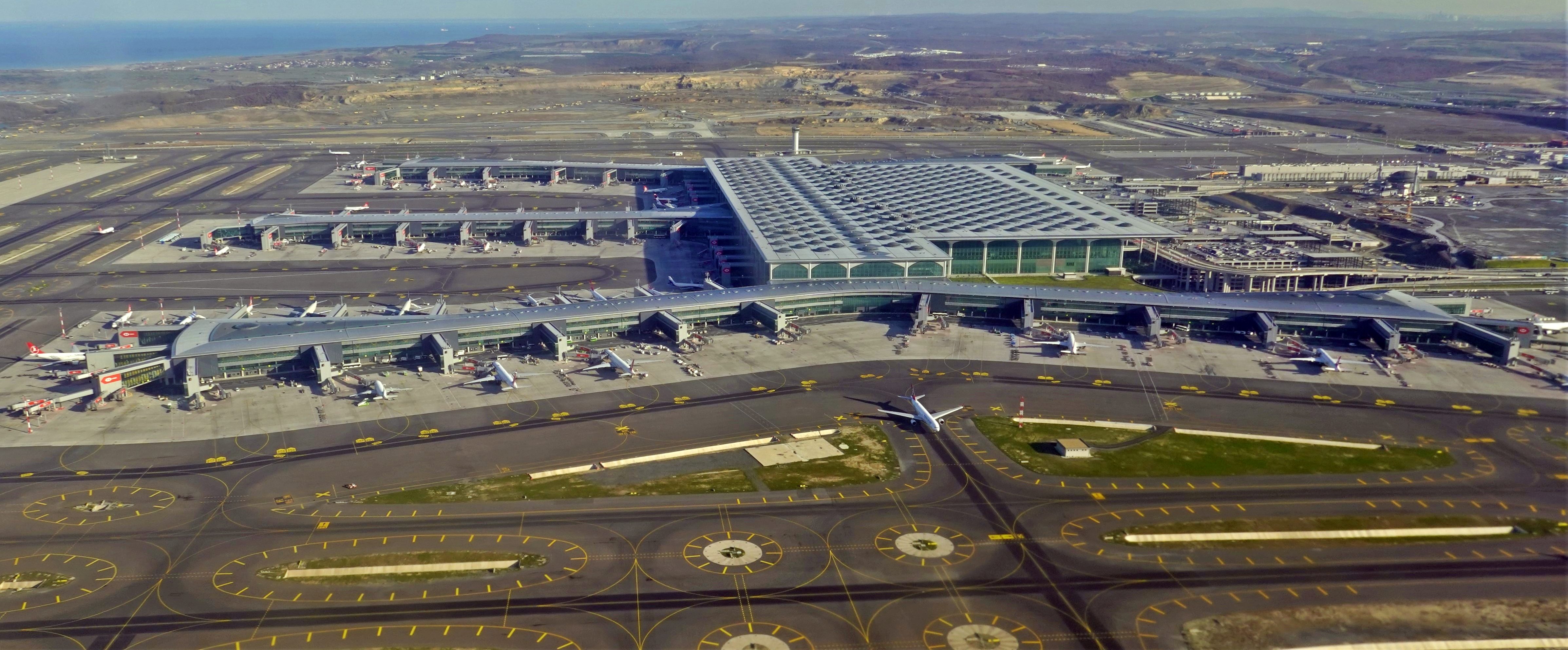
Per the airport's published info, assistance staff have met arriving passengers at the aircraft door with a wheelchair or electric cart, escorted them through passport control (often via priority lanes), helped at baggage reclaim, and brought them through to the arrivals hall — the meeting point where a pre-booked driver waits. IST is a very large terminal; gate-to-kerb can exceed a kilometre, so this escort is worth having even for travellers who can walk short distances.
Meeting points
Departing passengers have used marked assistance meeting points at the terminal entrances and check-in area; arriving passengers are met at the aircraft. If your assistance does not appear at the gate, tell cabin crew before disembarking — they radio the ground team. Do not set off across the terminal alone hoping to find help en route.
What assistance does not cover
The programme ends at the terminal. It does not source an accessible vehicle, and assistance staff cannot conjure a ramp-equipped van at the kerb. The transfer itself is the part you arrange separately, in writing, before you fly (sections 03 and 04).
03 · Accessible vehicles at IST
Accessible taxis at Istanbul Airport — what has been available
There is an official channel for accessible vehicles at IST. Treat it as real but variable — and know exactly what to ask before you rely on any vehicle, booked or not.
The arrivals taxi desk
Per the airport's published accessibility info, wheelchair accessible vehicles have been available through the taxi desk in the arrivals hall at IST — you ask the desk staff, and they call an equipped vehicle forward or summon one. Availability at any given hour is not guaranteed and arrangements change; verify at istairport.com before travelling. If you land without a booking, this desk is your first stop — not the kerbside queue.
Standard taxis: when they work
A folding manual chair travels well in an ordinary yellow taxi: the passenger transfers to the seat, the chair folds into the boot. Metered fares apply — ~₺1,200–1,700 to Taksim, ~₺1,400–1,900 to Sultanahmet — with no night surcharge at any hour. Where standard taxis fail is rigid frames, powered chairs, and anyone who cannot transfer out of their chair.
Three things to check on any "accessible" vehicle
A folding ramp suits most manual chairs; heavy powered chairs may need a hydraulic lift. Ask which one the vehicle has, and whether the passenger rides seated in the chair with tie-downs and a chair-user seatbelt.
Door height, interior height and ramp width all have limits. Send your chair's length, width, height and weight and ask the operator to confirm the vehicle takes it — do not accept "it will be fine" without the numbers.
Accessible vans vary from two spare seats to six. Say how many people are travelling with luggage so nobody is left arranging a second car at the kerb.
04 · Pre-booking an accessible van
Book before you fly — and get the equipment confirmed in writing
The difference between a booking that works and one that fails is a written reply listing the equipment. A verbal "yes, accessible" from any operator is worth nothing at the arrivals kerb.
-
1
Send the full picture in one message
Wheelchair type (manual or powered, folding or rigid), dimensions and weight, battery type if powered, number of companions, luggage, flight number and date, destination with a Google Maps pin. One complete message gets you a precise vehicle match; a vague one gets you a hopeful guess.
-
2
Require written confirmation of the equipment
The reply should name the vehicle type and state: ramp or lift, tie-downs, whether you ride seated in the chair, companion seats, and the all-in price to your door. Screenshot it. If the operator will not put the equipment in writing, book elsewhere — that reluctance is the warning.
-
3
Reconfirm 24 hours out
A short message the day before — "confirming tomorrow, flight TK-XXXX, same vehicle?" — catches substitutions before they reach the kerb. A flight-tracked driver absorbs reasonable delays without a new booking.
-
4
Verify at the arrivals hall
Match the driver's name sign, first name and vehicle plate against your messages before leaving the hall. If the vehicle that arrives is not the one confirmed in writing, you have the screenshot — and the airport taxi desk as the fallback.
05 · Metro & Havaist
M11 metro and airport coaches — what's realistic in a wheelchair
Public transport from IST is cheap and partly accessible. It deserves an honest framing: workable for some travellers, hard for others, and never as door-to-door as a van.
M11 metro — lifts exist, allow extra time
Per the airport's and metro operator's published info, M11 stations have lifts from street to platform, including the airport station and Gayrettepe (~₺42, ~30 min). The station sits a long, level walk from arrivals, changing to the M2 at Gayrettepe means further lifts and corridors, and any single out-of-service lift can strand the journey. Doable for a confident chair user with time in hand — verify current lift status locally, allow a generous margin, and prefer travelling with a companion.
Havaist & HAVABUS — folded chairs in the hold
Havaist coaches from IST (₺170–420 by line, HVIST-1 direct to Taksim) and HAVABUS from SAW (Taksim ₺200–280, Kadıköy ₺150–220) carry folded wheelchairs in the luggage hold, and drivers routinely help load them. Boarding, though, is by steps — fine if you can climb a few stairs with assistance, effectively out of reach for a powered chair. And the coach drops at a stop, not your hotel: budget a short onward taxi.
Gaps remain — plan around them, not into them
Street-level Istanbul is the weak link: broken pavements, steep hills in Beyoğlu and Galata, kerbs without cuts. The airport end of the journey is the well-supported part. That is the practical case for a door-to-door vehicle — the metro saves money, the van saves the day.
06 · Sabiha Gökçen
SAW notes — same rule, smaller distances
Landing on the Asian side changes the geography but not the method: assistance via the airline, vehicle in writing before you fly.
What's easier at SAW
Sabiha Gökçen is a single, compact terminal — gate-to-kerb distances are a fraction of IST's, which matters when every metre is effort. Assistance is requested the same way, through your airline at booking or 48 hours ahead. For Asian-side destinations the runs are short and cheap by Istanbul standards: SAW to Kadıköy ~₺1,000–1,500 in a metered taxi, roughly half the cross-city equivalent.
What's not easier
The SAW taxi queue is, if anything, more uniformly standard saloons than IST's, and there is less published detail about accessible vehicles on demand — so the pre-booked equipped van matters even more here. European-side hotels add a bridge crossing (tolls ₺50–100, passed to the passenger): SAW to Taksim runs ~₺1,400–1,900 metered. The M4 metro and HAVABUS carry the same caveats as their IST counterparts — lifts and holds exist, door-to-door they are not.
07 · FAQ
Accessible transfers — frequently asked
The questions wheelchair users and their companions ask most before flying into IST or SAW.
Are Istanbul airport taxis wheelchair accessible?
Some are. Per the airport's published accessibility info, wheelchair accessible vehicles have been available through the taxi desk in the arrivals hall at Istanbul Airport (IST) — but a ramp-equipped van is never guaranteed to be waiting at the kerb at any given hour. Verify current arrangements at istairport.com, and pre-arrange an equipped vehicle before you fly rather than relying on the standing queue. A standard yellow taxi can carry a folded manual chair in the boot, but it has no ramp or lift.
How do I book airport assistance at Istanbul Airport?
Through your airline, not the airport. Istanbul Airport runs a passenger assistance programme (branded IGA Cares in the airport's published material) that is requested via your airline at booking, or at least 48 hours before departure — the airline passes the request to the airport team. Confirm the current procedure at istairport.com or with your carrier, and check that the request actually appears on your booking before you fly.
Do accessible transfers cost more than a normal taxi?
It depends on the vehicle. A metered yellow taxi charges the same UKOME tariff for every passenger — roughly ₺1,200–1,700 from IST to Taksim, for example. A dedicated ramp- or lift-equipped van is usually quoted as a private fixed-price transfer, and that quote can sit above the metered fare. Whatever you book, get the all-in price in writing before the pickup, alongside written confirmation of the equipment.
Can my electric wheelchair go in a normal taxi?
Usually not. Powered chairs are heavy — often 100 kg or more — and rarely fold, so a saloon-car boot does not work. The dimensions and weight decide everything: measure length, width, height and weight, send them with your booking message, and pre-confirm that the vehicle has a ramp or lift plus tie-downs rated for a powered chair. A folding manual chair, by contrast, fits most standard taxis.
Is the M11 metro from Istanbul Airport step-free?
Per the airport's and metro operator's published info, M11 stations — including the airport station and Gayrettepe — have lifts from platform to street. Lifts can be busy or occasionally out of service, so allow extra time, and factor in that changing to the M2 at Gayrettepe means further lift moves. The airport metro station is a long, though level, walk from arrivals. Verify current lift status locally before relying on it.
Is Sabiha Gökçen (SAW) accessible too?
Yes, with the same pre-arrange rule. SAW is a smaller, single-terminal airport, so distances from gate to kerb are shorter than at IST. Assistance is again requested through your airline in advance, and an accessible vehicle should be pre-booked in writing — the SAW taxi queue is dominated by standard saloons. HAVABUS coaches take folded chairs in the hold but board by steps.
What should I put in my booking message?
Five things: your wheelchair type (manual or powered, folding or rigid), its dimensions and weight, how many companions are travelling, your flight number and date, and your destination. That single message lets the operator match the right vehicle first time — and gives you a written record of exactly what was promised.